

Jun 10th 2026
How do I teach my toddler to ride their balance bike?
You bought your toddler a Strider balance bike! If they're walking instead of sitting on the seat, hesitant to ride, or you’re wondering what their progress should look like, you're in the right place.
Below, you’ll find our most asked questions. You’re not alone in your curiosity, or maybe confusion, and we’re here to walk (well, stride) you through your toddler’s learn-to-ride journey. We’ll start with the purchase of a 2-in-1 Rocking Bike, answering questions as they normally pop up chronologically, so feel free to scroll down to your toddler’s specific stage in their Strider journey and return when a new concern pops up later down the road — or should we say, sidewalk!
What balance bike should I buy for my toddler?
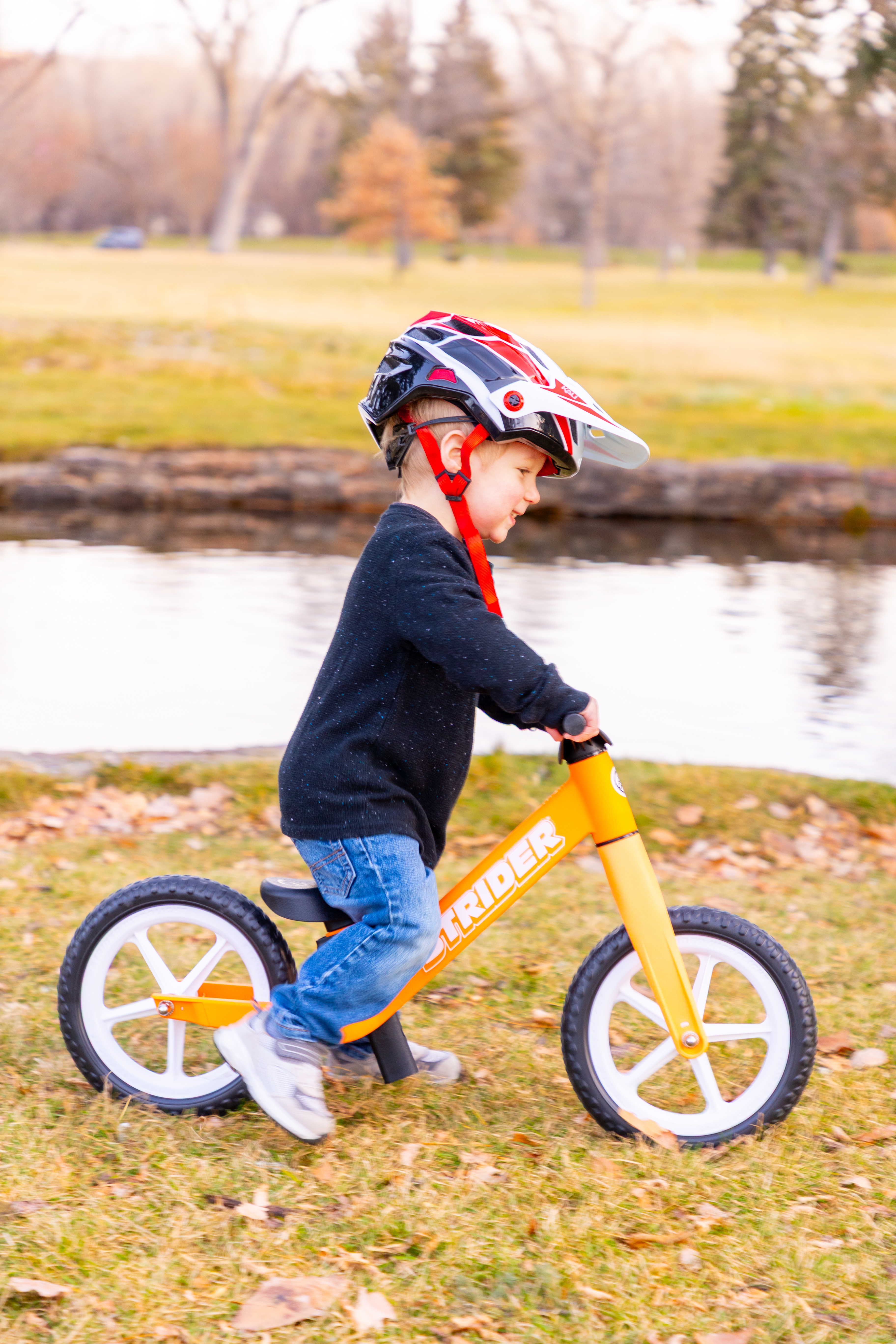
First, you’ll want to narrow down which size bike your toddler will need based on their size. To find the perfect fit, measure your child's inseam (the measurement from their crotch to the floor, wearing shoes). Our step-by-step guide on how to get that perfect inseam measurement may help! Here is a quick guide based on your kiddo’s measurements:
- 12–15-inch inseam: Strider 12 Comp
- 12–17-inch inseam: Strider 12 Sport
- 12–17-inch inseam: Strider 12 Pro
- 16–23-inch inseam: Strider 14x
Once you’ve determined what size range your kiddo falls into, you can narrow down your choice of bike! As you can see, the 12 Pro has the highest range of adjustability and will typically last your toddler until they’re 5 years old; but that doesn’t automatically make it the right bike for your child!
What’s the difference between the 12 Comp, 12 Sport, and the 12 Pro?
The differences come down to three factors: frame material, weight, and adjustability.
12 Comp: Our newest 12” bike comes with an ultra-light nylon composite frame and all the Genuine Strider quality that millions of kids and parents have loved. Our lightest 12” bike, the 12 Comp weighs only 4.9 pounds, so it’s a fantastic basic starter bike for kids aged 1 to 3 years old.
- Handlebar height is fixed at 19 in.
- Seat range: 11-15 in.
12 Sport: Our iconic, durable model built with a lightweight steel frame (approximately 6.7 pounds). It's a quality investment for a long-lasting toddler bike. This bike can last kids from 1 to 4 years old.
- Handlebar range: 18-22 in.
- Seat range: 11-17 in.
12 Pro: The ultimate upgrade featuring a premium aluminum frame (approximately 5.6 pounds). One pound lighter than the 12 Sport and with an even longer lifespan, it’s easier than ever for tiny riders to lift and maneuver their bike without help — perfect for competitive or timid riders alike! This bike is also our most adjustable. The Strider 12 Pro can last kids from 1 to 5 years old, maximizing the value of your little tyke’s first bike.
- Handlebar range: 18-22 in.
- Seat range: 11-19 in.
Are Strider balance bikes safe for indoor and outdoor use?
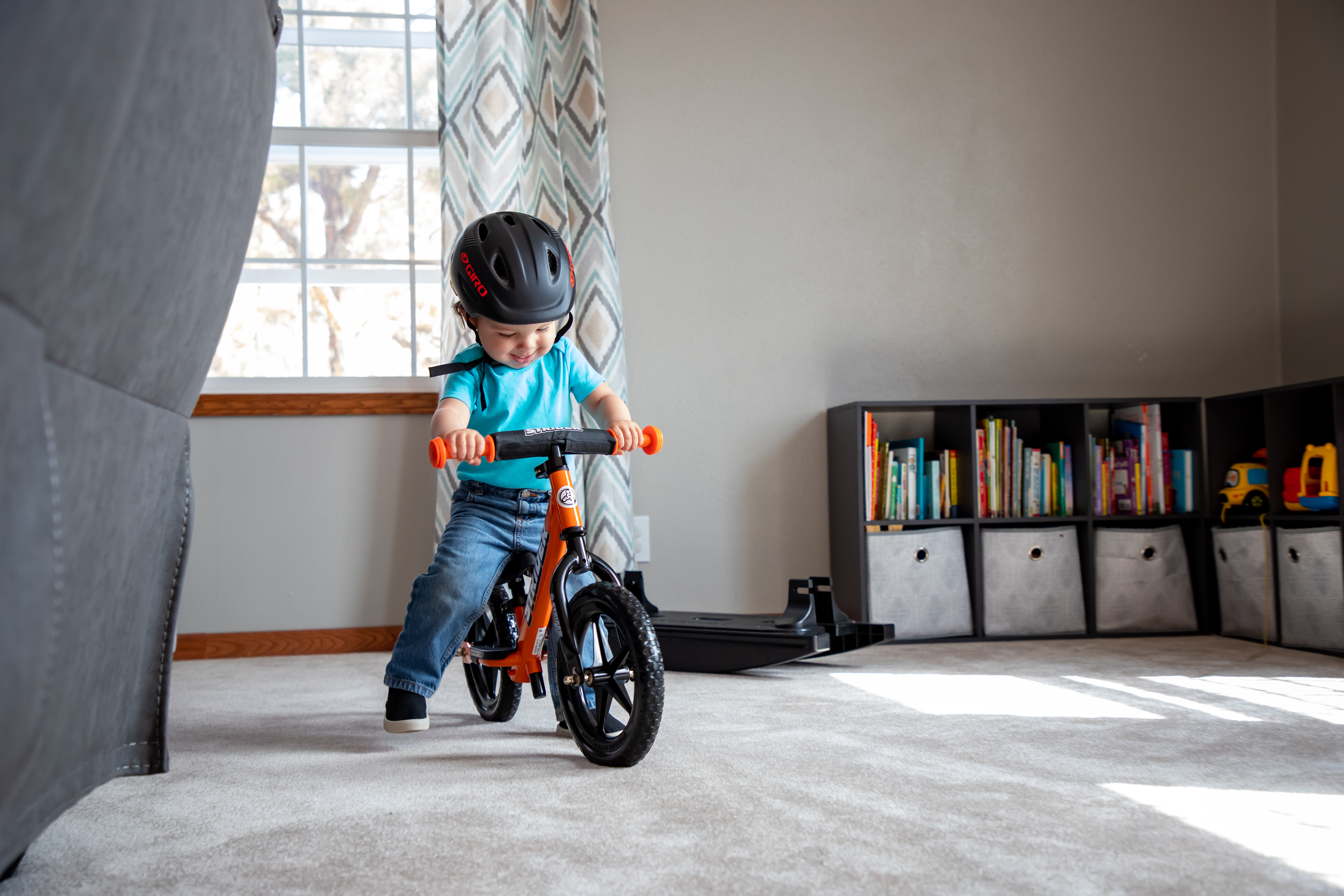
YES! Strider 12” bikes come with our Ultralight Wheels, which are made of foam. The Ultralight Wheels are scuff and scratch free, so if your little ripper wants to practice in the living room, they’re welcome to! When they take their bike outside, the foam tires will never go flat, so their bike will always be ready to go when they’re ready to ride. They can navigate grass, trails, even beaches or creek crossings, and they’ll have a great time adventuring with their balance bike.
Over the years, we’ve found that having a lightweight, never-flat foam tire is preferred for a toddler’s first bike. When they’re just staring out, functionality and maneuverability are more important than super high traction, because they’re not navigating tricky obstacles or moving fast enough to truly slide out. But when your beginner starts to turn into a pro and they’re ready for more bounce and traction, our Strider High-Traction Wheels are available and make a fantastic upgrade to their balance bike.
My toddler isn’t sitting down on the seat of the 2-in-1 Rocking Bike!
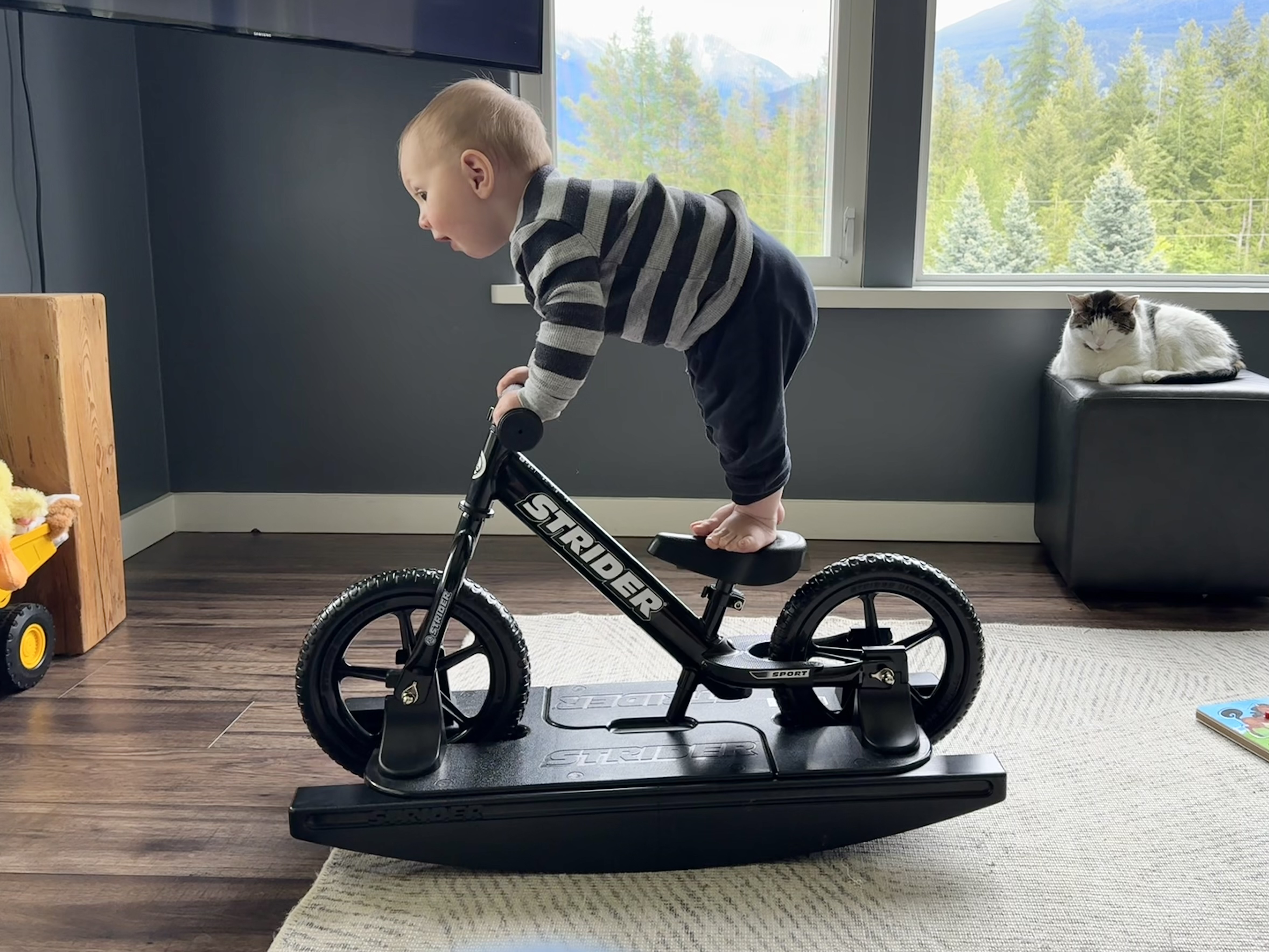
That’s okay! The bike seat is new to your child. Standing, not so much. It’s completely normal for toddlers to stand over the seat with their feet planted on the Rocking Base platform. As they get more comfortable, they’ll transition between standing over the seat to sitting on the seat. Either way, they’re building strength in their arms, core, and legs as they hold on to the handlebars and rock. They’re also figuring out their center of gravity, and learning what it feels like to maneuver an object that’s as big as they are.
My toddler is standing on the seat of the 2-in-1 Rocking Bike!
Well, it’s called a balance bike, so they just might balance on it! In all seriousness though, if they can stand on the seat and hold onto the handlebars, you can probably take it off the base and let them take their first strides. Of course, keep an eye on your toddler when they’re on their bike, from our Rocking Bike to the 14x with pedals, but know that this is a totally normal stunt for them to pull. You’re well on your way to raising a BMX or motocross pro, so start signing them up for our races!
How do I help my kid want to ride their balance bike?
Great question! When toddlers see their balance bike for the first time, it may be intimidating for them. They’re seeing an object that’s much lighter but about the same size as they are, and you’re asking them to climb on and figure out how to control it! Here are some tips to help them feel comfortable on their Strider bike and get them excited to ride it.
- Ride with them! If they see you riding, they’ll want to follow your example.
- Take them to their favorite park with their bike. They’ll feel comfortable and be eager to explore the park on two wheels.
- Take them to a spot where they’ll see other kids riding bikes — even if they’re not balance bikes! Your toddler will see other children on bikes and want to give it a try.
- Cheer them on at every step of the process from getting on the bike to slowing walking with it. Your encouragement will help them feel proud of their progress and they’ll strive for more!
- Be patient. Everyone’s learn-to-ride journey looks different, but they’re all full of moments to celebrate.
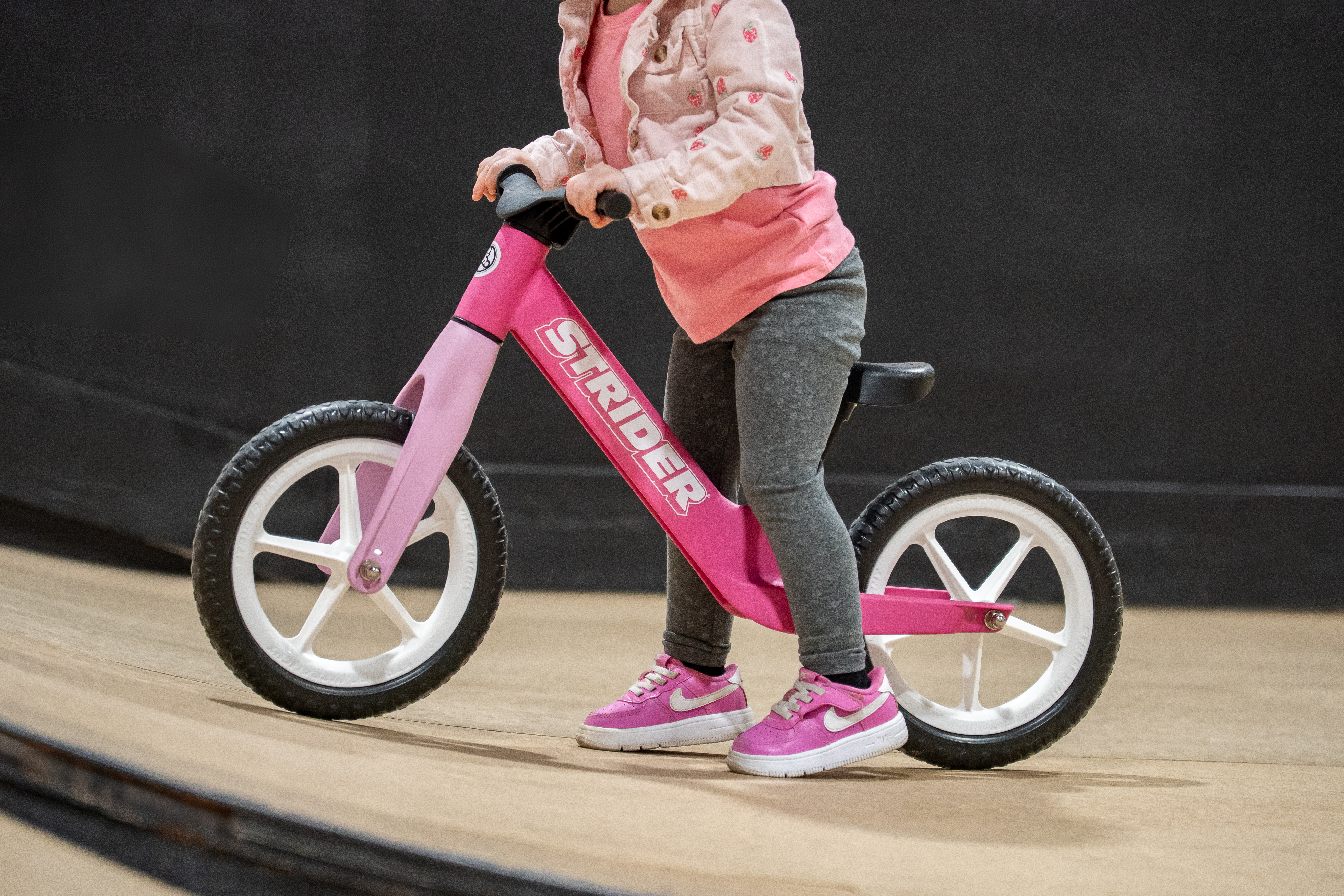
My toddler is tip-toeing or walking really slow with their bike. What should I do?
That’s okay! They’re figuring out a lot of different things at the same time. They’re probably still a little new to walking, and they’re certainly new to biking! If your toddler is standing over the frame/seat of the bike and walking slow or tip-toeing, they’re simply building the coordination skills they need to ride! Eventually, they’ll start to walk quickly and then sit on the seat and stride. Give them some time and space to learn how the bike works and moves with them, and rest easy knowing that most toddlers start this way.
My toddler isn’t sitting on their balance bike, they’re just walking with it.
If your toddler just started using their bike and they’re standing over the seat/frame and walking the bike, pushing it instead of riding it, that’s normal too. Your toddler is figuring out how their bike works, and how they need to move with it to maintain control and balance. They’ll start to sit on the seat and stride as they gain confidence and a littler experience. They’ll be striding down the sidewalk in no time — for now, just encourage them to keep trying, whether they’re seated, standing, or somewhere in between.
What is the correct seat height for a balance bike?
There’s no one correct seat height for a bike. Your toddler will grow, so you’ll have to adjust the bike with them! To find the right fit, the child's feet should be flat on the ground with a slight bend in their knees while seated. This allows them to comfortably walk, stride, and stop with their feet. To set the seat height, have your toddler stand up over the seat. Open the clamp and adjust the post so that the seat is a few inches below the crotch, and then close the clamp and have them sit down. Make any necessary adjustments from there so that your child can sit with their feet on the ground with slightly bent knees.
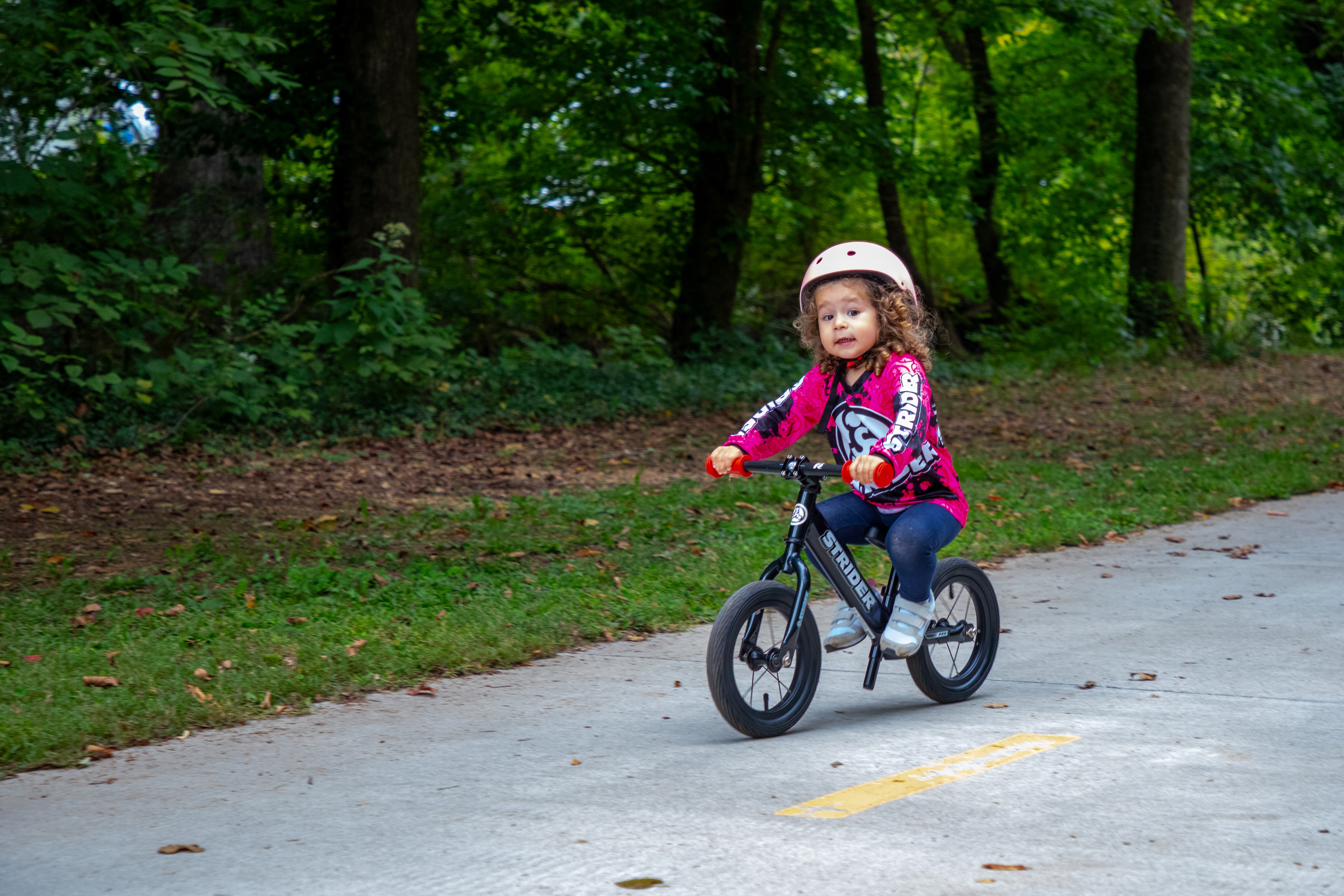
How do I get my toddler to use the standing footrest on their balance bike?
As with striding, gliding takes time to learn. First, they’ll have to build the skill to move fast enough that they actually have the speed to lift their feet and coast. Then, they have to build confidence in their own balance abilities. The standing footrests are designed to be similar in location to dirt bike foot pegs, and in a place that feels natural for coasting. So, ergonomically, they’ll feel natural and your child will eventually transition to placing their feet their while they coast. They just need some time to build up the confidence to take both feet away from the ground! Once you’ve seen that they can balance adequately, taking them to a place with some hills (like a pump track) may help too — they’ll have a much easier time building up enough speed to actually be able to glide and move their feet to the standing footrests.
Why doesn’t the Strider bike have hand brakes?
Strider 12” bikes intentionally do not come with hand brakes because they overcomplicate the learning process for young riders. When kids start riding (usually ages 1.5 to 3), we want them to focus 100% on steering and balancing. Hand brakes are a distraction, and their hands aren't large or strong enough yet to properly and reliably squeeze a lever. Introducing handbrakes too early will only make the process more complicated and frustrating for beginners.
The safest and most intuitive way for a young child to stop a balance bike is always with their feet, which they do naturally on a Strider balance bike. This helps them build critical control over their speed and puts them in the safest position to safely stop and catch themselves before they fall. Handbrakes will be easily and naturally introduced later when young riders have mastered the basics and have the capability and confidence to add more complex skills to their arsenal. Once converted to pedal mode, the Strider 14x pedal kit includes a coaster brake.
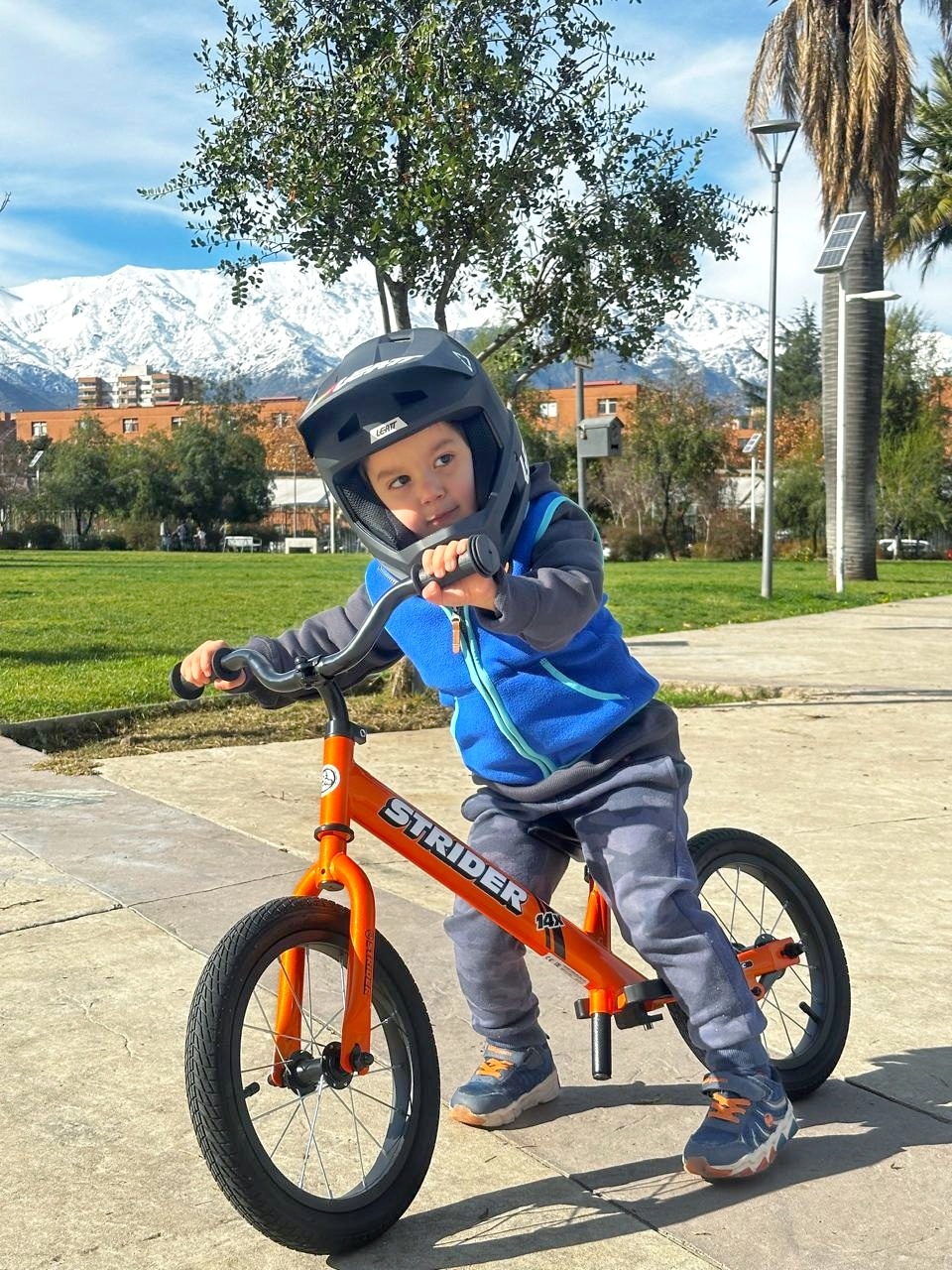
Is my child ready for a bigger bike?
Just because they can size up doesn’t always mean they should. Before you upgrade your child from a 12” to a 14x, make sure that they have the skills, strength, and confidence to successfully stride and eventually ride on the bigger bike. The size and weight difference between our 12” and 14” balance bikes may not feel significant to you, but to a tiny human who is a fraction of your size, transitioning from a 6.7-pound bike to a 12.5-pound bike is a massive change. It’s better for them to be a smidge big on their 12” bike while they finish developing their balance and confidence, because if they jump to a bigger bike too fast, they may not have the skills and strength to successfully maneuver it. This can create frustration, fear, and a subpar riding experience for the kiddo, so they may not love their bike as much as they could have.
Plus, keep in mind that they’ll need to have an inseam that’s at least as tall as 16 inches to move up to the Strider 14x, because the 14” bike is indeed bigger! So, if they are skilled and confident riders on their 12” bike and properly sized for the 14x, they’re probably ready to size up.
Is my child ready for a pedal bike?
If they can stride along on their Strider 14x and glide with their feet up, then yes! The 14x starts in balance mode so that your kiddo can get used to the bigger, heavier bike. Once they’ve successfully transferred their mastery of striding, gliding, and navigating turns and obstacles over to the larger balance bike, they’re ready for the pedal kit! Read on... we even added some tips for teaching your kid to pedal!
Can I put pedals on 12" Strider balance bikes?
Nope. Not because toddlers can’t pedal! Simply because the 12” lineup was designed to teach balance and control of a toddler’s first bicycle. Based on a toddler's proportions and learning curve, the geometry of a 12” bike specifically accommodates tiny legs and a low center of gravity for the bike itself. So, pedals simply don’t fit on the 12” bikes, because they wouldn’t have enough clearance to cycle without hitting the ground. When they’re ready to pedal, the 14x will take them to that next step.
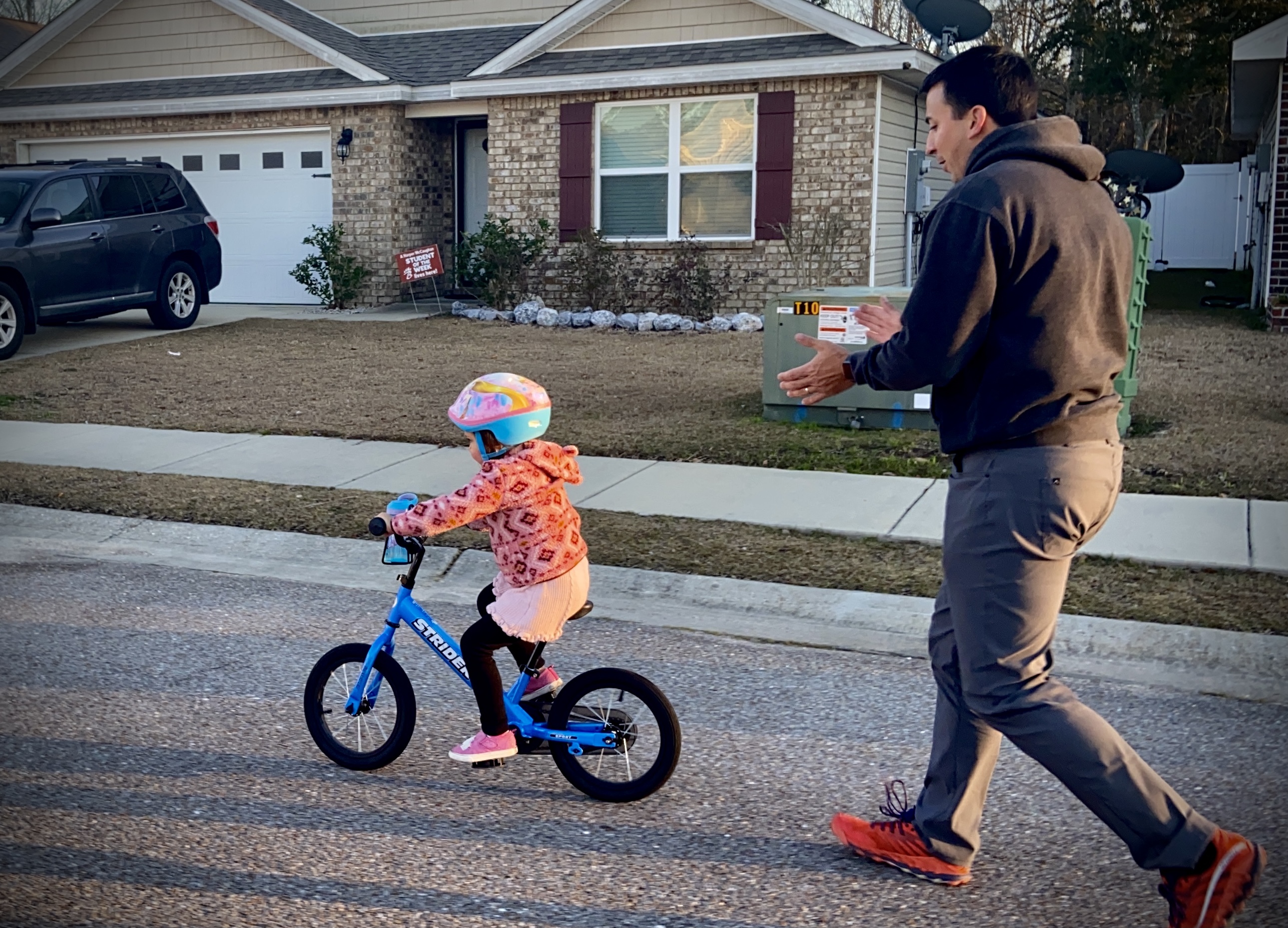
How do I teach my kid to pedal their bike?
Some kids learn to pedal in 15 minutes, and others take a few months! You’re not doing anything wrong if they’re slow to pedal. The best way to teach your kid to pedal is to start them on one of our 12” bikes and then transition them to a 14x. You’ll want to start them off in balance mode on the 14x, because it’s bigger and heavier than any of the 12” bikes.
Once they’re feeling strong and confident in balance mode, add the Easy-Ride Pedal Kit to their 14x! But don’t have them start pedaling from standing still. Getting the bike going is the trickiest part with pedals, since they are trying to balance and build speed at the same time. That’s why we made the pedals narrow — kids can start by pushing with their feet, just like they did in balance mode.
Then, encourage them to put their feet up on the pedals while they’re gliding. They’ll already have balance and momentum, so the pedals aren’t a tough change. Plus, they’ll already be used to utilizing an alternating stride to push themselves forward from learning in balance mode, so once they get going, it’ll stick with them forever. One final pedal (and even balance) mode tip — don’t support the bike, support the rider. If you can spot/stabilize the rider, they’ll feel your corrections to their own center of balance and be able to apply them, whereas grabbing their bike can make them feel like they have less (or even no) control over what they’re doing.
As always, if you run into an issue with your Strider product or have questions about your toddler’s learn-to-ride journey, you can reach out to us at (605) 342-0266 where a Strider employee is happy to help you. You can contact us online too, and we’ll answer any questions you may have!